What Are Crew Socks? The Complete Style, Fit, and Buying Guide
Walk into any gym, scroll through social media, or glance at someone walking down the street, and you will notice one constant detail on everyone’s feet. Lower-cut socks have quietly taken a back seat, and taller socks have completely reclaimed the spotlight. If you have found yourself asking what are crew socks, the simplest answer is that they are classic mid-calf socks designed to sit six to eight inches above your shoe line.
Crew socks offer the sweet spot between low-cut athletic styles and full knee-high lengths. They provide enough coverage to shield your lower leg from shoe chafing, yet they remain lightweight enough for everyday comfort. Below, you will find everything you need to know about their design, history, functional benefits, and modern outfit pairings.
What Are Crew Socks? Definition, Anatomy, and Length
To truly understand what are crew socks, you need to look at where they rest on your body and how manufacturers knit them. A standard crew sock sits directly at the midpoint of your calf muscle. When pulled straight up, the top band rests roughly six to eight inches above the heel collar of your shoe.
The construction of these socks relies on three distinct anatomical sections:
-
The Ribbed Cuff: The upper shaft features vertical ribbed knitting combined with elastane or spandex. This flexible channel expands around the curve of your calf and contracts gently to keep the fabric from sliding down your leg.
-
The Anatomical Heel Cup: Unlike straight, seamless tubes, authentic crew socks feature an engineered Y-stitched heel pocket. This pocket cradles your heel bone, preventing fabric bunching under the arch.
-
The Cushioned Footbed: Quality pairs often incorporate terry-loop padding beneath the heel, ball of the foot, and toe box to absorb shock during everyday walking.
So, what are crew socks in terms of overall fit? They are engineered garments that hug your lower leg, offering a balanced combination of warmth, grip, and everyday protection.
The Surprising Origin: Why Are They Called Crew Socks?
When people first wonder what are crew socks, their next question is almost always about the unusual name. The term does not refer to a flight crew or a construction gang. Instead, it traces its roots back to competitive university rowing teams in the early twentieth century.

Collegiate rowing crews needed athletic socks that provided adequate protection against the cold morning air, splashing river water, and the sliding wooden seats of their rowing shells. Shorter socks slipped beneath their heels, while knee-high stockings trapped excess heat and restricted muscle movement. The mid-calf cut proved to be the ideal working compromise.
Decades later, the United States Navy adopted the same practical cut as standard uniform issue for sailors. The term crew sock stuck permanently, evolving from specialized military and collegiate athletic equipment into a global wardrobe essential.
Crew Socks vs. Other Sock Heights: The Comparison Breakdown
Choosing the right sock length depends on your footwear, your outfit silhouette, and the weather. When exploring what are crew socks, it helps to see how they stack up against alternative cuts.
| Sock Style | Leg Placement | Best Footwear Pairings | Primary Purpose |
| No-Show Socks | Below the shoe collar | Loafers, boat shoes, slip-ons | Invisible silhouette, zero bulk |
| Ankle Socks | Directly at the ankle bone | Low-top running shoes | Hot-weather cardio, minimal tan lines |
| Quarter Socks | Just above the ankle bone | Mid-top sneakers, trail runners | Achilles protection without extra calf heat |
| Crew Socks | Mid-calf (6 to 8 inches) | Sneakers, work boots, casual shoes | All-day coverage, blister prevention, styling |
| Over-the-Calf | Directly below the knee | Dress shoes, winter boots | Formal dress pants, compression, cold weather |
The Critical Difference Between Tube Socks and Crew Socks
Many shoppers confuse these two traditional athletic designs. A tube sock is knitted as a straight, continuous cylinder without a dedicated heel pocket. It stretches over any foot size, but the lack of structure causes the fabric to stretch unevenly and slide down over time. In contrast, crew socks feature an intentional right-angle shape tailored to human foot anatomy, delivering better arch stability and all-day comfort.
Fabric and Material Selection: Cotton, Wool, and Synthetics
A sock is only as reliable as the yarn spun into it. If you want to know what are crew socks made from, the answer depends entirely on the activity you plan to tackle.

1. Combed Cotton Blends
Combed cotton remains the king of everyday streetwear and casual lounging. Manufacturers comb the raw cotton fibers to remove short strands and impurities, leaving behind an exceptionally soft, breathable yarn. Blending combed cotton with polyamide and elastane gives the sock structural longevity, so it retains its shape through repeated laundry cycles.
2. Merino Wool
Merino wool is the gold standard for hiking, outdoor work, and cold-weather commutes. Unlike itchy traditional wool, ultra-fine merino fibers feel soft against bare skin. Merino excels at thermoregulation, keeping your feet warm in freezing temperatures and surprisingly cool during brisk summer hikes. It also naturally neutralizes odor-causing bacteria and pulls sweat away from your skin.
3. Synthetic Performance Blends
Athletic performance pairs rely heavily on polyester, nylon, and elastane. These synthetic fibers do not hold water the way untreated cotton does. Instead, they wick perspiration outward toward your shoe upper, where it can evaporate quickly during intense training sessions.
Functional Benefits: Why Athletes and Workers Wear Crew Socks
Athletes, weightlifters, and tradespeople rely heavily on this specific cut for practical, performance-based reasons. Learning what are crew socks used for reveals several health and safety advantages:

-
Shin and Abrasion Protection: In the gym, crew socks shield your shins from coarse barbell knurling during heavy deadlifts and rope climbs. On trail runs, they block low bushes, thorny branches, and flying gravel from scraping your bare skin.
-
Boot Collar Cushioning: Work boots, combat boots, and hiking shoes feature high leather collars that rub painfully against bare ankles. The ribbed calf of a crew sock creates an essential barrier that stops chafing and raw blisters.
-
Targeted Compression and Arch Support: Many modern sports crew socks incorporate elastic compression bands around the midfoot arch. This gentle squeeze stimulates blood circulation, limits muscle fatigue, and stops the sock from shifting inside your shoe.
How to Style Crew Socks Today:
The conversation around everyday fashion has changed dramatically over recent years. Understanding what are crew socks in the modern era requires looking at streetwear culture, where visible socks have become an intentional statement piece rather than something to hide.
Pairing Crew Socks with Low-Top Sneakers and Shorts
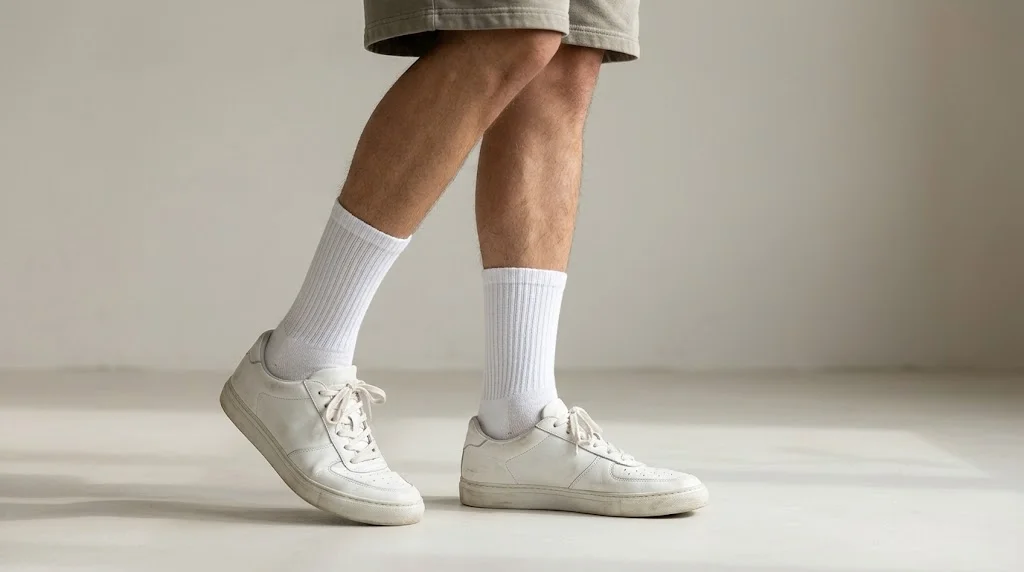
The days of hiding your socks beneath your sneakers are largely behind us. Modern streetwear trends embrace crisp white ribbed crew socks pulled up with lifestyle sneakers, running shoes, and vintage trainers. When wearing shorts, pull the socks smooth up the calf for an athletic vibe, or allow them to gather slightly above the ankle for a relaxed, casual aesthetic.
Styling Crew Socks with Loafers and Casual Trousers
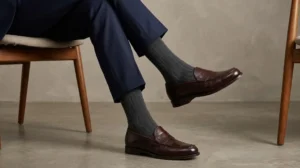
Crew socks also shine in smart-casual and formal settings. A fine-gauge ribbed sock in charcoal, navy, or earthy olive creates a smooth visual transition between your shoe leather and the hem of your trousers. When you sit down and your pant leg rides up, the mid-calf rise ensures that your bare skin remains completely covered.
Sock Care and Maintenance:
There is nothing more frustrating than pulling on a favorite pair of socks only to feel them slouching into your sneakers after twenty minutes of walking. Knowing what are crew socks also means knowing how to preserve their elasticity over the long term.
-
Wash in Cool or Warm Water: High water temperatures break down delicate elastane and rubber threads woven through the cuff. Stick to water under forty degrees Celsius to keep the ribbed band strong.
-
Avoid Harsh Heat in the Dryer: Tumble drying on high heat shrinks cotton fibers and warps the synthetic elastic core. Whenever possible, dry your socks on low heat or hang them up to air dry.
-
Do Not Fold the Cuffs Over: Many people roll the top ribbed cuff over the ankle when storing socks in drawers. This habit stretches the elastic band permanently out of shape. Instead, fold your pairs flat in half to maintain uniform tension.
FAQs
What are crew socks best suited for?
Crew socks are suited for nearly every environment, including gym workouts, casual weekend errands, rugged outdoor hiking, and smart-casual workplace settings. Their balanced coverage makes them the most versatile sock style available.
How high up the leg do crew socks go?
A standard crew sock extends to the middle of the calf, resting roughly six to eight inches above the top edge of your shoe.
Should crew socks fit tightly around your calves?
Your socks should hug your calves snugly without pinching your skin. If your socks leave deep, itchy red indentations on your legs at the end of the day, look for pairs with wider ribbed cuffs or step up to a larger size.
Why did Gen Z switch back to wearing crew socks?
Fashion trends shifted away from hidden ankle socks toward vintage athletic aesthetics from the 1980s and 1990s. Visible ribbed crew socks provide clean lines, balance out oversized streetwear silhouettes, and show off subtle logo branding with trainers and shorts.
Whether you need protective cushioning for demanding trail boots, moisture control during heavy cardio, or a clean fashion statement to complete your sneaker rotation, the crew sock delivers unmatched versatility. Knowing what are crew socks makes it simple to choose the ideal blend of combed cotton, merino wool, or synthetic compression for your everyday routine.








Post Comment