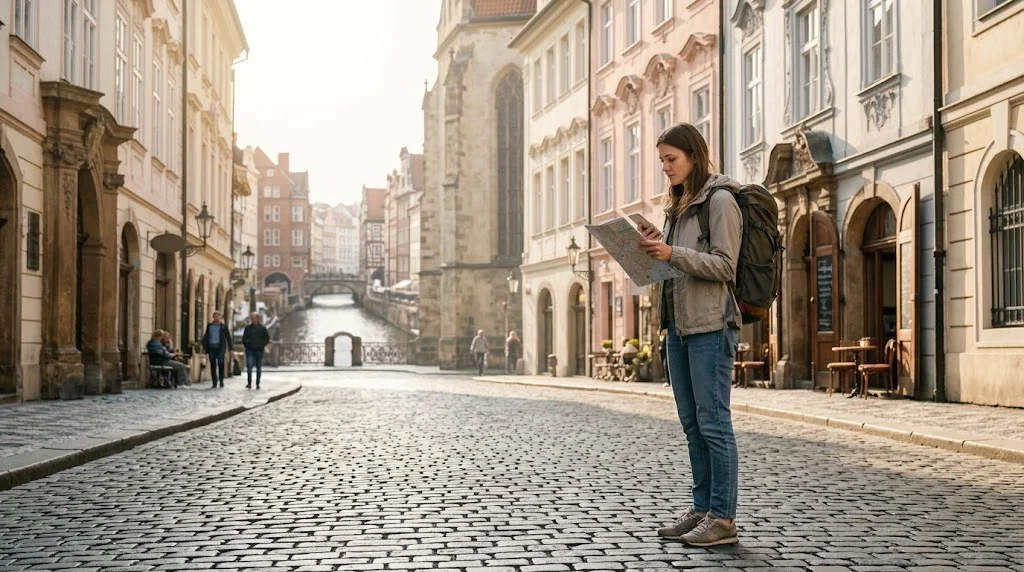
Backpacking Europe News: Complete Guide to Rules
Exploring the European continent with a single bag on your back has always stood as a rite of passage for adventurous travelers. From wandering past candlelit canals in Amsterdam to navigating cobblestone alleys in Krakow, it offers unmatched freedom. Yet anyone tracking recent backpacking europe news knows that the landscape of budget travel is shifting rapidly.
Where travelers once hopped borders on loose whims with a stamped passport and a loose handful of euros, the modern journey demands sharper preparation. Between fully automated digital borders, strict airline carry-on policies, and city regulations designed to curb overtourism, going in unprepared can quickly derail your savings. Understanding the latest backpacking europe news ensures that your dream trip across the continent remains smooth, affordable, and unforgettable.
Critical Entry Regulations: The New Digital Border Reality
The European Union has overhauled how international visitors enter its borders. For years, non-EU travelers relied on physical ink stamps, occasionally slipping through gray areas of loose enforcement. That era has officially ended.
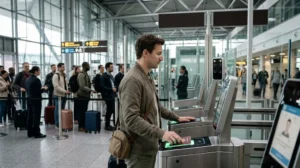
What Biometric Screening Means for First-Time Entry
The European Entry/Exit System, known as the EES, is now fully operational across external Schengen borders. The system replaces ink stamps with digital tracking, recording your facial image and fingerprints upon arrival.
If you are entering the Schengen Area for the first time under these rules, anticipate longer queues at major flight and land crossings. Once your biometrics are enrolled, subsequent border crossings become faster via self-service kiosks. Staying updated with backpacking europe news will help you anticipate which border terminals experience peak seasonal bottlenecks so you can schedule adequate transfer windows between flights and cross-border trains.
Tracking the Rolling 90/180-Day Rule Under Automated Borders
The classic Schengen 90/180-day rule remains intact: travelers from visa-exempt countries (such as the US, Canada, Australia, and the UK) can stay up to 90 days within any rolling 180-day window. What has changed is enforcement.
Automated digital gates calculate your stay down to the exact minute. There is zero tolerance for overstaying by even an afternoon. Accidental overstays now trigger automatic fines and travel bans. If you plan a longer gap-year trip, you must alternate your time inside the Schengen Zone with extended stays in non-Schengen destinations.
Cross-Channel Connections and UK ETA Enforcement
Many backpackers fly into London due to cheaper transatlantic airfares before taking the Eurostar or a budget flight to mainland Europe. Keep in mind that the UK enforces its own Electronic Travel Authorisation (ETA) scheme for eligible visitors. Ensure you complete this digital clearance several days before departure to prevent gate denials before your European journey even begins.
Strategic Route Architecture: Pacing Your Journey Without Burnout
A common mistake made by first-time backpackers is treating the map of Europe like a checklist. Trying to fit eight capital cities into three weeks results in physical exhaustion, blown budgets, and hours lost staring at train station departure monitors.
       [Central Europe Loop]
       Berlin -> Prague -> Vienna -> Budapest -> Krakow
                 |
                 v
       [The Balkans Trail]
       Ljubljana -> Zagreb -> Split -> Mostar -> Kotor -> Tirana
The Central Europe Loop: High Culture and Low Daily Spending
Central Europe remains the premier recommendation for first-timers. The connection between Prague, Vienna, Budapest, and Krakow forms an intuitive loop with short transit legs and frequent departures.
This circuit gives you access to stunning historic architecture, lively social hostels, and world-class museums without draining your wallet. Rail connections between these hubs run smoothly, making it simple to travel without extensive advance planning.
The Balkans Trail: Stretching Money Beyond the Schengen Border
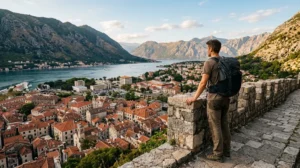
If you need to pause your Schengen clock or want to make your savings last twice as long, head toward the Balkans. Moving south through Croatia, Bosnia and Herzegovina, Montenegro, and Albania reveals spectacular mountain vistas, pristine coastlines, and historic stone towns at a fraction of Western European costs. While regional bus networks require patience compared to high-speed rail, the cultural warmth and budget-friendly living make the trade-off worthwhile.
Western and Southern Corridors: Managing Tourist Inflows
Western Europe hubs like Paris, Amsterdam, Barcelona, and Rome deliver iconic sights, but they require careful crowd management. In peak summer months, long queues and scorching urban heat can drain the joy from sightseeing. If your heart is set on these classic cities, plan your visits during the shoulder seasons of May, early June, or September. The weather is milder, prices drop noticeably, and walking through world-renowned neighborhoods becomes far more enjoyable.
The Open-Jaw Advantage: Eliminating Costly Backtracking
Never book a round-trip ticket in and out of the same city unless the savings exceed two hundred euros. Instead, book an open-jaw ticket: arrive in London or Amsterdam and depart from Athens or Rome. Eliminating the need to travel back across the continent saves valuable days of vacation time and cuts significant rail or flight costs.
Navigating European Transit: High-Speed Rails, Sleeper Trains, and Flights
Europe possesses one of the world’s most comprehensive transit networks, but booking options blindly can lead to surprise costs.
| Transit Type | Primary Advantage | Major Hidden Pitfall | Best Use Case |
| High-Speed Rail | City-center to city-center; fast and scenic | Mandatory seat reservation fees on rail passes | Journeys under 4 hours |
| Night Trains (Sleeper) | Saves an entire night of hostel accommodation | Sells out weeks in advance; noise variables | Long hauls (e.g., Vienna to Venice) |
| Budget Airlines | Inexpensive base fares for long cross-continent hops | Strict carry-on size and weight baggage fines | Bypassing awkward geographical barriers |
| Regional Coaches | Cheapest baseline transit; flexible last-minute fares | Slower journey times; subject to highway traffic | Medium journeys on a shoestring budget |
The Reality of Eurail and Interrail Seat Reservation Fees
A rail pass offers romantic appeal, but it is not always the cheapest route. Popular express trains, including the French TGV, Italian Frecciarossa, and the cross-border Eurostar, require pass holders to purchase mandatory seat reservations. These seat fees range from ten to thirty-five euros per journey and have limited allocations.
If your route primarily covers countries like Germany, Austria, and the Czech Republic, regional passes provide great flexibility. However, if your trip focuses on France, Spain, or Italy, booking individual point-to-point tickets well in advance often proves cheaper.
Sleeper Routes: Replacing Hostel Beds with Night Trains
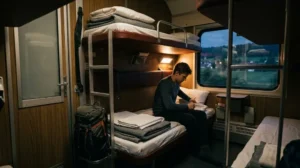
Night train travel has enjoyed a massive resurgence across the continent. Sleeper networks such as Nightjet and European Sleeper connect major hubs overnight, including routes like Berlin to Paris, Vienna to Venice, and Brussels to Prague.
A couchette or sleeper compartment ticket covers both your transit and your night’s stay, letting you wake up directly in the heart of your next destination. These berths are popular among budget travelers, so reserve them several weeks ahead.
Point-to-Point Rail Versus Budget Airlines
A budget airline ticket priced at twenty-five euros sounds unbeatable until you factor in transportation costs to distant suburban airports, bag check fees, and gate check surcharges. Whenever the rail journey takes fewer than four hours, take the train. You arrive directly in the city center, skip security lines, enjoy free onboard Wi-Fi, and avoid baggage restrictions.
Realistic Backpacking Budgets and Modern Accommodation Shifts
Inflation and local municipal changes have reshaped the daily cost of travel. The outdated advice claiming you can explore Western Europe on thirty euros a day no longer holds true.
Real Daily Spending Tiers Across European Regions
A realistic daily budget breaks down into three practical categories:
-
Shoestring (€60 to €80 per day): Sleeping in large hostel dorms, cooking meals in shared hostel kitchens, prioritizing free walking tours, and utilizing regional buses or discount train fares. Common in Central and Eastern Europe.
-
Balanced (€90 to €140 per day): Staying in modern social hostels, eating daily set lunches at local cafes, grabbing street food for dinner, and paying entry fees for marquee museums.
-
Comfortable (€150+ per day): Private hostel rooms or budget boutique guesthouses, sit-down dinners with wine, high-speed rail travel, and regular guided tours. Common across Scandinavia, the UK, and Western European capitals.
Short-Term Rental Bans and Their Impact on Hostel Prices
Major travel destinations like Barcelona, Florence, and Amsterdam have implemented sweeping restrictions on short-term holiday rentals to preserve local housing.
While this protects local neighborhoods, it has concentrated tourist demand onto traditional accommodations. Hostel dorm beds in popular hubs now sell out months ahead, and last-minute booking prices during peak season can surge dramatically. To secure reasonable rates, lock in your city center beds at least three to four weeks in advance.
City Access Fees, Overnight Taxes, and the 20 Percent Contingency Rule
Stay mindful of localized municipal fees. Venice charges daily entry access fees for day-trippers on select high-traffic dates, while nearly every major European city levies an overnight tourist tax per person, collected upon hostel check-in. These fees range from two to eight euros per night and are rarely included in upfront booking platform totals.
Always carry an untouchable 20 percent reserve in your travel fund. This safety buffer covers missed connections, sudden hostel changes, replacement shoes, or last-minute pharmacy runs, ensuring that unexpected expenses never cut your trip short.
The One-Bag Travel Checklist: Carry-On Specs and Gear Selection
Traveling light across Europe is not a stylistic choice; it is an absolute necessity. Lugging a bulky 70-liter backpack over ancient cobblestones and up six flights of narrow spiral hostel staircases ruins your travel momentum.
Choosing the Right 30L to 40L Front-Loading Pack
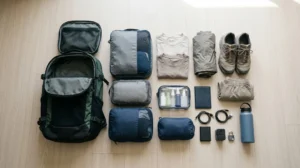
Choose a travel pack between 30 and 40 liters that opens clamshell style like a suitcase rather than a top-loading wilderness rucksack. Clamshell access lets you grab clean socks or your charger without unpacking everything onto a shared dorm room floor. A stowable harness system also prevents straps from getting tangled in train overhead racks.
Airline Sizing Frameworks and Weight Restraints
Low-cost carriers across Europe (such as Ryanair, Wizz Air, and easyJet) enforce strict carry-on dimensions. A standard overhead bag must measure within 22 by 14 by 9 inches (55 x 35 x 23 cm) and weigh under 10 kilograms. Gate agents routinely test bags in metal sizers. Keeping your pack compact avoids gate baggage fees that often exceed the original cost of your flight. Following the latest backpacking europe news helps travelers stay informed about digital border checks, budget-friendly routes, train reservations, and changing accommodation costs.
Modular Organization, Security Gear, and Safe Drinking Water
Pack intentionally by focusing on durable essentials:
-
Compression Packing Cubes: These keep your bag organized and compact your wardrobe into separate, manageable compartments.
-
Sturdy Padlock: A flexible steel cable combination lock fits every hostel locker style, keeping your passport and electronics safe while you explore.
-
Comfortable Footwear: Expect to walk ten to fifteen miles daily on uneven stone streets. Bring one well-broken-in pair of walking sneakers and one lightweight secondary pair.
-
Filtered Water Bottle: Municipal tap water is safe to drink across most of Europe, and cities like Rome and Paris provide public water fountains. Bringing a reusable, filtered water bottle keeps you hydrated without spending money on single-use plastic bottles.
Ground-Level Logistics: Payments, Data, and Personal Safety
Smooth daily travel relies on smart digital systems. Setting up your mobile technology and payment methods before leaving home eliminates daily friction.
Seamless Connectivity: Regional eSIM Configurations
Skip the hassle of visiting physical carrier shops to swap plastic SIM cards at every border. Install a regional European eSIM on your phone before departure. Digital providers offer 30-day and 90-day regional data packages that automatically switch between national cellular networks as you cross borders, giving you instant GPS maps and translation access the second you arrive.
Zero-Fee Digital Banking and Currency Traps
Most European businesses operate virtually cashless, from subway ticket machines to open-air market stalls. Use digital travel cards like Wise or Revolut to spend in foreign currencies at the true interbank exchange rate without foreign transaction fees.
When paying at a card machine or withdrawing cash from an ATM, always select the prompt to be charged in the local currency (such as Euros, Czech Koruna, or Polish Zloty). Never accept the machine’s conversion rate. Converting through the terminal activates Dynamic Currency Conversion, adding hidden markups of six to twelve percent.
Station Awareness and Common Travel Scams
Violent crime rates across Europe remain very low, but petty theft and pickpocketing are common around busy transit hubs. Follow these safety fundamentals:
-
Never keep your phone or wallet in your back pocket, especially on crowded metro lines or near major monuments like the Eiffel Tower and Colosseum.
-
Be cautious of unsolicited petition signers, friendship bracelet sellers, or individuals claiming to be plainclothes transit ticket inspectors demanding immediate cash payments. Legitimate transit controllers always carry clear badges, card machines, and formal identification.
-
Always use hostel locker facilities. Never leave your electronics, passport, or backup bank cards lying on your bunk bed while taking a shower or heading out for dinner.
Final Thoughts
Backpacking europe news remains one of life’s most rewarding adventures. By keeping up with current backpacking europe news, embracing digital border requirements, respecting your physical limits, and packing a lean carry-on bag, you set yourself up for an incredible experience.
Plan your route with intention, leave room in your schedule for spontaneous detours, and focus on enjoying the rich history, vibrant cultures, and everyday moments that make this continent special. Stay updated with the latest backpacking europe news to plan smarter routes, save money, and enjoy an unforgettable adventure across Europe.







Post Comment