Indian Head Massage: The Complete Guide to Benefits
Modern daily routines place a heavy burden on our upper bodies. Hours spent hunched over laptops, scrolling through phones, and carrying daily stress tend to settle directly into the shoulders, neck, and scalp. An Indian head massage is an ancient holistic therapy designed specifically to unravel that localized tension.
An Indian head massage is a seated, restorative treatment that targets the upper back, shoulders, neck, scalp, and face through rhythmic kneading, friction, and pressure point work. Rather than treating the body as isolated parts, it bridges physical muscular relief with mental clarity, helping to restore balance to an overworked nervous system.
The Ancient Roots and History of Champi
The origins of this practice trace back thousands of years to the Indian subcontinent, where it is known traditionally as champi. Rooted firmly in Ayurvedic medicine massage, the technique was originally used within households as an everyday self-care ritual. Mothers passed down custom herbal blends to daughters to condition long hair, while local barbers routinely provided a vigorous scalp rubbing following a traditional haircut.
The treatment evolved from a regional custom into a globally recognized therapy during the late twentieth century. In the 1970s, physical therapist Narendra Mehta traveled back to his native India to study the technique systematically. He expanded the routine to include the neck, upper back, and shoulders, formalizing what we know today as modern Champissage. In Ayurvedic philosophy, working these areas harmonizes the body’s upper energy centers, encouraging a free flow of vitality while quieting mental chatter.
Core Techniques and Acupressure Points Used
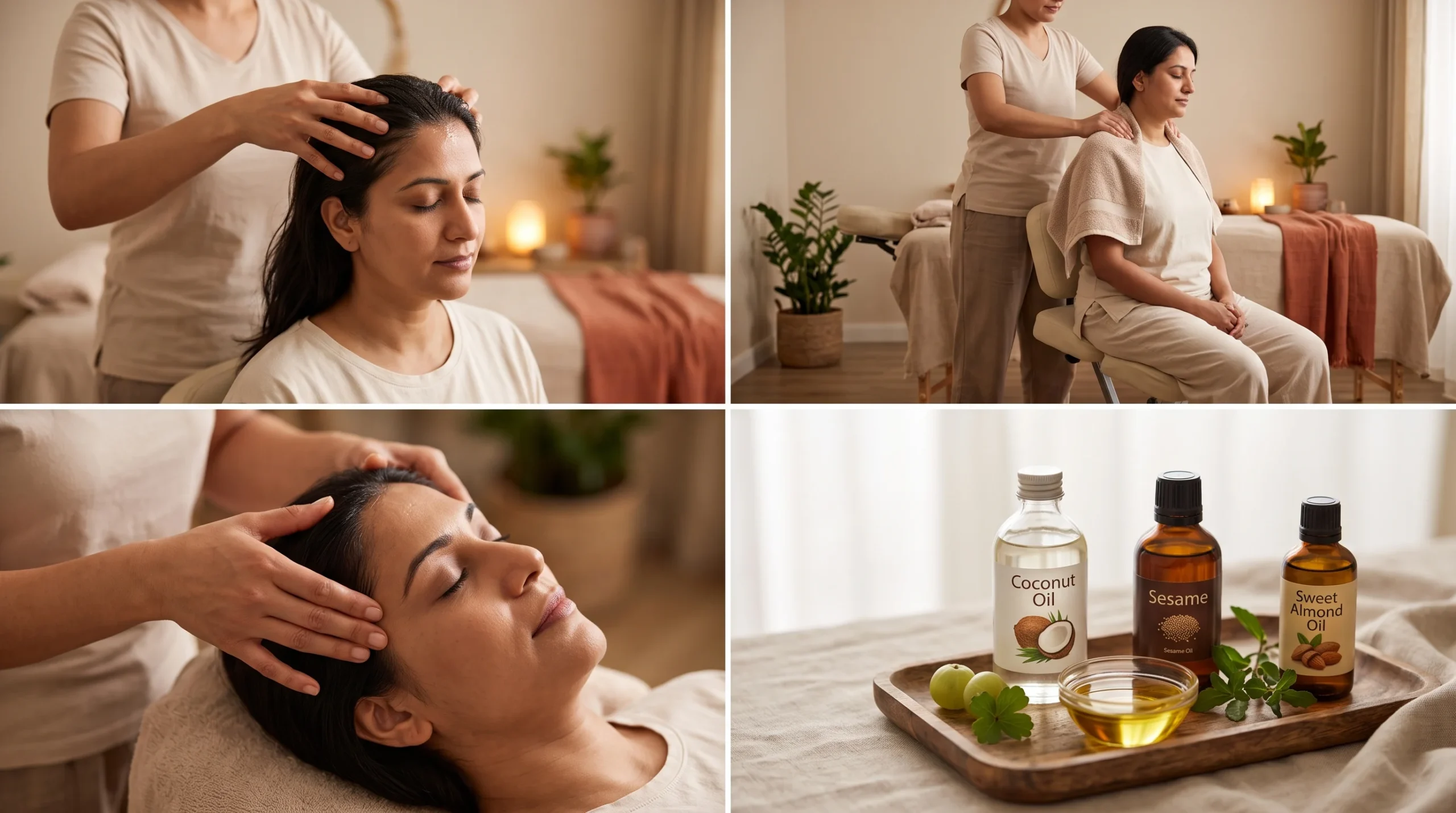
During a traditional seated head massage, the therapist works through a fluid combination of soft tissue therapy maneuvers. The session typically begins around the upper back and shoulders before moving progressively upward to the base of the skull, the crown, and finally the gentle contours of the face.
Therapists blend classic strokes such as smooth effleurage to warm the tissues, followed by deeper petrissage and focused kneading to break down persistent knots. A critical component of this methodology involves stimulating pressure points on head and neck regions. Known in Ayurveda as Marma points, these anatomical junctions house dense networks of nerves and connective tissue. Applying focused pressure to the temples, the occipital ridge at the base of the skull, and the forehead helps to drain stagnant lymphatic fluid and induce profound relaxation.
Proven Benefits for Body and Mind
While many people turn to this therapy purely for pampering, the physiological and psychological outcomes run much deeper.
1. Relieves Muscular Strain in the Shoulders and Neck
Sedentary desk work forces the upper trapezius and levator scapulae muscles to support the weight of the forward-leaning head for hours at a time. The direct kneading of an Indian head massage softens these tight fibrous bands, restoring natural range of motion and easing stubborn neck and shoulder stiffness.
2. Reduces Tension Headaches and Migraines
Tightness in the scalp and cervical spine frequently triggers radiating head pain. By releasing structural tension along the temporalis muscles and the base of the cranium, relieving headaches and migraines with massage becomes achievable without relying solely on over-the-counter pain medications.
3. Enhances Scalp Circulation and Hair Health
Healthy hair growth depends entirely on a rich supply of oxygenated blood reaching the roots. An Indian head massage stimulates follicles by improving blood circulation across the entire cranial dermis. While it cannot magically cure genetic baldness, it creates an optimal environment for hair retention and nourishes the scalp.
4. Eases Digital Screen Fatigue
Extended exposure to computer monitors leads to subtle, unconscious contractions around the eyebrows and temples. Focused facial acupressure helps relieve eye fatigue, reducing that heavy, dull ache behind the eyes and clearing minor sinus pressure.
5. Restores Nervous System Balance and Promotes Sleep
The steady, rhythmic manipulation of the scalp triggers the body’s parasympathetic mode, effectively lowering cortisol levels while releasing natural endorphins. This deep physical calm carries over into the evening, helping those suffering from insomnia or fragmented rest achieve a deeper, more restorative night of sleep.
Best Oils for an Indian Head Massage
Traditional sessions frequently incorporate warm, plant-based oils to nourish the skin and reduce friction along the hair shaft.

-
Coconut Oil: Cool, light, and deeply hydrating, making it ideal for soothing a dry, itchy scalp or calming an irritated nervous system during warmer months.
-
Sesame Oil: Warm, rich, and grounding, frequently recommended in Ayurveda for easing deep muscular stiffness and dry tissues.
-
Sweet Almond Oil: Packed with vitamins E and D, almond oil absorbs cleanly without leaving an excessively greasy residue.
If you are receiving a treatment on a lunch break or need to head straight back to an office meeting, you can easily request a dry massage. The manual friction, mobilization, and Marma point compression remain completely effective without applying a single drop of oil.
What to Expect During Your Session
Knowing what to expect can help you unwind more completely from the moment you arrive.
Unlike conventional Swedish or full-body deep tissue treatments, you do not need to undress completely or lie facedown on a treatment table. You will usually remain comfortably seated upright in an ergonomic chair. When deciding what to wear to an Indian head massage, select loose, comfortable clothing. A soft cotton t-shirt, a tank top, or a button-down shirt that grants the therapist easy access to your collarbone, neck, and upper shoulder line works best.
A standard session lasts anywhere from thirty to forty-five minutes. Your therapist will begin with gentle compressions over the upper back, gradually working into the scalp with circular motions, gentle hair tugs to relieve dermal tension, and closing with feather-light strokes across the brow and temples.
Contraindications, Safety, and Normal Side Effects
While safe for most individuals, there are specific situations where you should postpone treatment or seek guidance from a medical doctor:
-
Recent head trauma, whiplash, or concussion within the past few months.
-
Active scalp infections, open wounds, psoriasis flares, or severe eczema.
-
A high fever or acute illness, as stimulating blood and lymph flow can worsen symptoms.
-
Severe hypertension or osteoporosis affecting the cervical spine.
After your session, it is normal to experience mild, temporary reactions. As your lymphatic system flushes metabolic waste, you may feel slightly light-headed, unusually drowsy, or notice a heightened need to hydrate. Drinking plenty of room-temperature water post-treatment supports this natural cleansing process and helps your muscles remain relaxed.
FAQs
How often should you book an Indian head massage?
For chronic neck tension or recurring stress headaches, a weekly session for three to four weeks provides an excellent reset. For general maintenance and mental well-being, once every three to four weeks is usually sufficient.
Will the massage make my hair fall out?
No. You may notice a few loose strands shed during the treatment, but these are telogen hairs that were already detached at the root and ready to fall. The gentle friction simply frees them.
Can an Indian head massage be combined with other therapies?
Yes. Many clinics pair it alongside full-body massage, reflexology, or osteopathy to address total body postural alignment and stress relief in a single comprehensive visit.









Post Comment