Sunburnt Lips: Fast Relief, Blister Care, and Healing Stages
Spending a long day outside without proper facial protection often leaves you with an unexpected, stinging surprise. Sunburnt lips are uniquely painful, often feeling far more sensitive than a sunburn on your shoulders or back. This happens because the skin on your lips, known anatomically as the vermilion border, is exceptionally delicate. It has only three to five cellular layers compared to the sixteen layers found on the rest of your face. Furthermore, your lips lack sweat glands, have very few sebaceous glands, and produce almost no protective melanin.
Because your lower lip protrudes outward at an angle, it receives up to twelve times more direct ultraviolet radiation than your upper lip. When UV rays penetrate this thin barrier, the tissue becomes inflamed, dry, and tight within just a few hours. If you are dealing with sunburnt lips right now, your priority is to calm the heat, protect the exposed tissue, and avoid common home remedies that can actually make the burn worse.
What Do Sunburned Lips Look Like?
Recognizing how sunburned lips feel and understanding your burn’s severity helps you choose the right treatment path. Most people experience mild redness and tenderness, but intense sun exposure can compromise the delicate mucosal barrier entirely.
First-Degree vs. Second-Degree Lip Sunburn
A first-degree burn is the most common form of lip sun damage. In this stage, the lips appear mildly swollen, feel uncomfortably dry, and turn noticeably red. Over the first twenty-four hours, they may sting when you talk, smile, or eat acidic foods. You will likely experience a tight, pulling sensation as the outermost layer of dead skin dries out, culminating in peeling after two or three days.
A second-degree burn penetrates deeper into the dermis. Along with intense redness and swollen sunburned lips, tiny, fluid-filled bubbles begin to surface. These sun blisters indicate that the deeper layers of the lip have suffered acute solar damage. The pain is usually sharp and persistent, and everyday actions like sipping water or speaking can cause extreme discomfort.
Sunburn Blister vs. Cold Sore: How to Tell the Difference
One of the most confusing parts of dealing with a sun blister on lips is figuring out whether you have a true burn blister or a cold sore. These two conditions require completely different treatments, so distinguishing between them is critical.
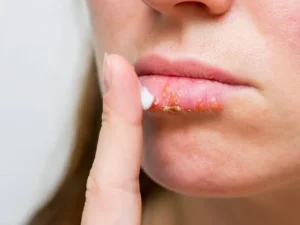
A sunburn blister typically appears as multiple, tiny, clear fluid-filled vesicles scattered evenly across the entire surface of the lip where the sun hit directly. They sting and burn, but they rarely throb or tingle before appearing.
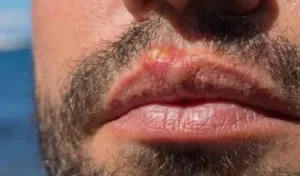
A cold sore, caused by the herpes simplex virus (HSV-1), behaves differently. UV radiation is a well-known immunosuppressant that triggers dormant viral outbreaks. A cold sore usually starts with a distinct tingling, itching, or burning sensation in one concentrated spot twelve to twenty-four hours before any bump appears. Cold sores then form a tight cluster of cloudy or yellow-fluid blisters, usually localized right along the outer edge of the lip margin. These blisters eventually break open, weep, and form a thick, golden crust.
If you have a sun blister on lips, leave the fluid bubble intact. Popping a sunburn blister strips away the natural biological bandage protecting the raw skin beneath, sharply increasing your risk of scarring and secondary bacterial infection.
How to Treat Sunburned Lips: Step-by-Step Immediate Relief
When treating sunburnt lips, acting swiftly helps calm the inflammatory cascade before the tissue suffers deeper cellular breakdown. You do not need expensive products; you simply need the right sequence of cooling and hydration.
Step 1: Cool the Area Safely
Your first move is to draw out the residual heat trapped within the tissue. Soak a clean, soft washcloth in cold water and hold it gently against your mouth for five to ten minutes at a time. Repeat this process every few hours. Alternatively, soak a cloth in cold skim milk. The proteins, lactic acid, and cool temperature in milk help soothe irritation and support initial cellular calming.
Never apply a bare ice cube directly to the burn. Extreme cold constricts blood vessels too aggressively and can cause frost-induced tissue necrosis on top of an existing thermal burn.
Step 2: Soothe Inflammation and Discomfort
Once the surface heat begins to subside, apply pure aloe vera gel directly to your mouth. Look for one hundred percent pure aloe that contains no synthetic fragrances, dyes, or alcohol. Aloe delivers polysaccharides that hydrate the tissue while delivering natural cooling benefits.
If you are experiencing severe swelling or throbbing, take an over-the-counter anti-inflammatory medication like ibuprofen. Ibuprofen works internally by inhibiting prostaglandin synthesis, which directly curbs localized swelling and tenderness. For severe, non-blistered inflammation, a very thin dab of over-the-counter hydrocortisone 1% cream applied once or twice a day to the outer lip edge can calm extreme swelling.
Step 3: Restore the Barrier Without Trapping Heat
As the initial stinging subsides, your lips will quickly begin to dry out. The damaged skin loses water rapidly through transepidermal water loss. Hydrate the area with light, breathable emollients. Pure shea butter, jojoba oil, or balms enriched with ceramides and hyaluronic acid help keep the healing skin flexible without suffocating it.
The Vaseline and Occlusive Trap:
One of the most common mistakes people make when managing sunburnt lips is immediately reaching for a tub of Vaseline or Aquaphor. While these petroleum-based ointments are gold standards for chapped lips, their behavior on a fresh burn is entirely different.
Petroleum jelly is a heavy occlusive agent. It forms an impermeable seal over the skin. If you slather thick petroleum jelly over a fresh sunburn during the first twenty-four to forty-eight hours, you inadvertently trap the radiant heat inside the tissue. This keeps the burning sensation active for longer and can exacerbate swelling.
Instead, reserve petroleum jelly for the second phase of healing. Once the acute heat has completely left your sunburnt lips, usually on day three or four, applying a thin layer of petroleum jelly over your moisturizer acts as an exceptional protective shield to seal in hydration and prevent premature cracking during the peeling phase.
What NOT to Put on Sunburned Lips:
When learning how to heal sunburned lips fast, knowing what to leave off your face is just as important as knowing what to put on it. Many conventional lip balms contain ingredients that actively irritate burned skin:
-
Camphor, menthol, and phenol: These compounds provide a familiar cooling tingle in everyday medicated lip balms, but on compromised skin, they act as chemical irritants that dry out the vermilion border and delay cellular healing.
-
Topical numbing agents: Avoid over-the-counter creams containing benzocaine or lidocaine. These local anesthetics are frequent triggers for contact dermatitis and can lead to severe allergic swelling on open, burned lip tissue.
-
Exfoliating scrubs: Never use sugar scrubs, washcloth friction, or toothbrushes to scrub away peeling skin. Pulling off dead skin before the underlying basal layer has regenerated causes micro-tears, bleeding, and potential scarring.
-
Citrus and vinegar remedies: Online DIY home remedies occasionally suggest applying apple cider vinegar or lemon juice to balance skin pH. Applying high-acid liquids to a mucosal burn causes chemical irritation and intense pain.
Recovery Timeline: How Long Do Sunburned Lips Take to Heal?
The duration of your recovery depends directly on whether your burn is superficial or blistering.
During the acute phase, spanning days one and two, redness, throbbing, and swelling reach their peak. Your sunburnt lips will feel warm, extremely tight, and raw.
From days three to five, the desquamation phase begins. The skin stops radiating heat and turns dry and crusty. Peeling will occur as your body sheds the UV-damaged keratinocytes. Keep your mouth well-lubricated with gentle, fragrance-free balms during this period, and let the dead skin slough away naturally while washing your face.
By days six to eight, the re-epithelialization phase takes over. Fresh, healthy skin replaces the damaged outer layer. Any minor swelling should be fully resolved, and your lip barrier will return to its baseline strength. A severe burn with blisters may take ten to fourteen days to heal completely.
When to See a Healthcare Provider
Most cases of sunburnt lips resolve safely at home with basic supportive care. However, certain symptoms indicate that your burn requires professional medical intervention.
Warning Signs of Infection and Complications
Seek medical care if the swelling becomes so pronounced that it interferes with your ability to open your mouth, drink fluids, or speak clearly. You should also consult a doctor if you develop systemic symptoms such as a high fever, chills, dizziness, or nausea.
Watch for signs of a secondary bacterial infection. If your lips begin oozing yellow pus, develop spreading red streaks, or form honey-colored crusts that fail to heal after a week, a physician may need to prescribe an oral or topical antibiotic.
Actinic Cheilitis: Long-Term Sun Damage Risks
Frequent, unprotected sun exposure does more than cause temporary discomfort; it substantially raises your long-term risk of developing chronic sun-induced damage. The most common pre-cancerous condition affecting the mouth is actinic cheilitis, often referred to as farmer’s lip.
Actinic cheilitis occurs predominantly on the lower lip due to cumulative UV exposure. It manifests as persistent dryness, rough sandpaper-like patches, white or grey scaly plaques, and a blurring of the sharp border where your red lip meets your normal skin. Because actinic cheilitis can progress to squamous cell carcinoma, any rough lip patch, sore, or ulcer that refuses to heal after two to three weeks must be evaluated promptly by a board-certified dermatologist.
How to Prevent Sunburned Lips
Healing a burn is uncomfortable, making prevention the best long-term strategy for maintaining healthy lips. Safeguarding your mouth from ultraviolet radiation requires only a few daily adjustments.
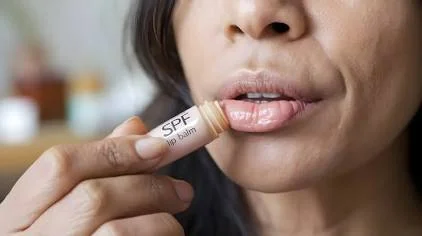
Start by wearing an everyday lip balm with a broad-spectrum rating of SPF 30 or higher. For individuals with sensitive skin, mineral-based formulas containing non-nano zinc oxide or titanium dioxide are ideal. Mineral sunscreens sit on top of the tissue and physically reflect UVA and UVB rays without causing the chemical stinging that synthetic filters sometimes trigger on delicate lips.
Remember that lip sunscreen wears off much faster than facial lotion due to talking, sunburnt lips, eating, and drinking. Reapply your SPF lip balm every two hours when outdoors, and apply it immediately after swimming, toweling off, or finishing a meal. Pairing your lip balm with a broad-brimmed hat provides physical shade that keeps your face and mouth shielded throughout the sunniest hours of the day. Consistent daily protection keeps your lips soft, comfortable, and completely free from sun damage year after year.







Post Comment