Kitchen Sink Waste: A UK Guide to Sizes, Traps, Soil Stacks and Garden Drainage
A kitchen sink waste carries dirty water from your sink to the drains below. It covers the plug hole, the strainer, the trap and the pipe run to the soil stack. Get any part wrong, and you get smells, leaks or a slow sink.
What Is a Kitchen Sink Waste?
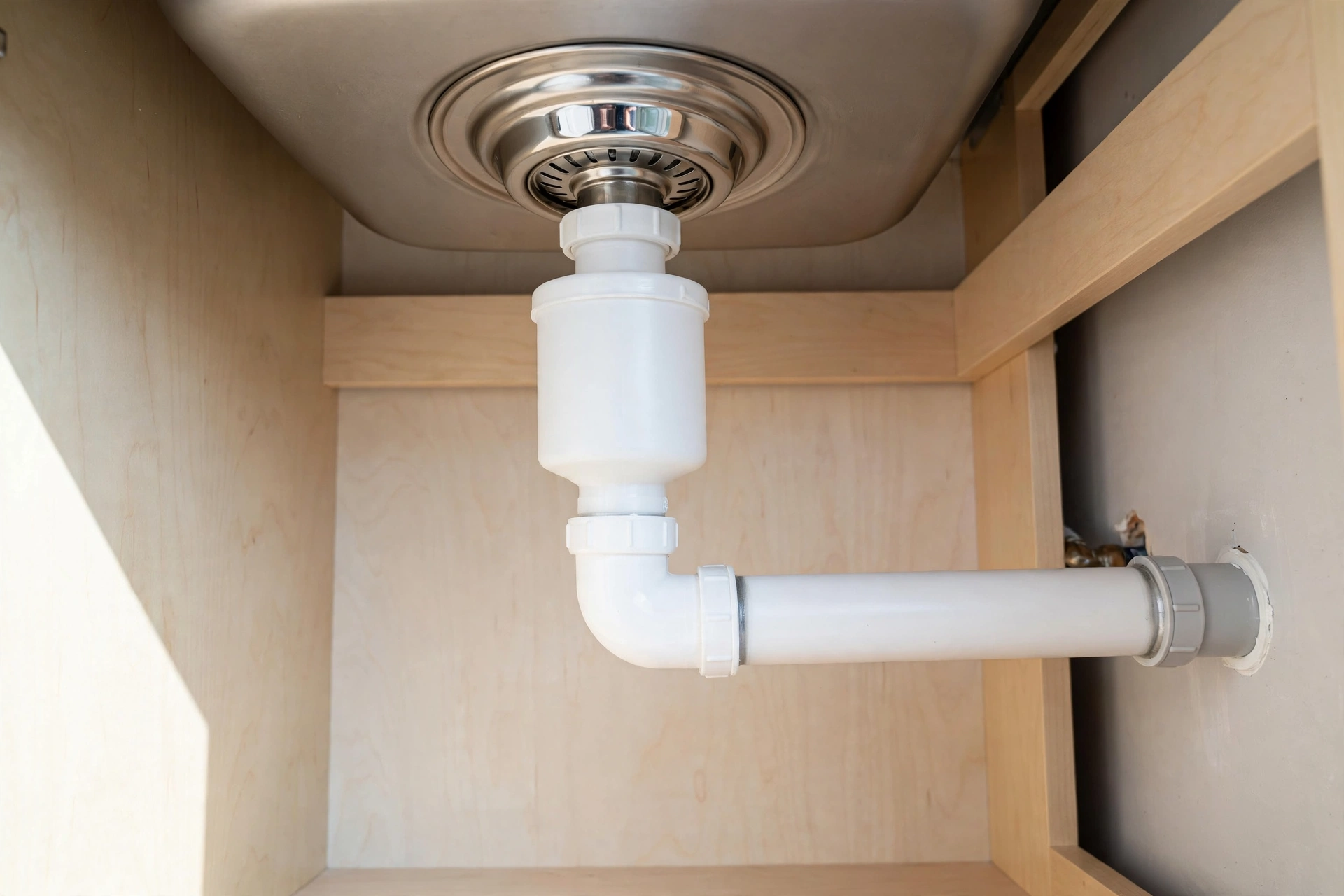
A kitchen sink waste is the set of parts that takes water away from the sink bowl. It starts at the plug hole in the base of the sink. Then it runs through a strainer, a trap and a waste pipe. Finally, it joins the soil stack or an outside drain.
First, the strainer stops food slipping down the pipe. The trap holds a plug of water, and that water blocks smells from the drain. In addition, the waste pipe carries the water away at a gentle fall.
Kitchen Sink Waste Pipe Size and Trap Types
First, UK Building Regulations set the sizes for a kitchen sink waste. Approved Document H gives a 40 mm waste pipe for a kitchen sink. In addition, the trap must hold a 75 mm water seal. A basin uses 32 mm, while a bath or shower uses 40 mm with a 50 mm seal.
Next, the waste run also has a length limit. A 40 mm pipe can run up to 3 m without a vent. Furthermore, the pipe needs a fall of 18 to 90 mm per metre.
Meanwhile, two trap types dominate UK kitchens. A bottle trap is compact, so it fits a tight cupboard. A P trap uses a U-bend, and it holds more water. As a result, a P trap resists siphoning better than a bottle trap. A basin trap, or basin waste trap, works the same way on a smaller scale. Meanwhile, cheap traps sometimes hold only 50 mm, and they lose their seal more easily.
How to Replace a Kitchen Sink Waste and Trap
You can replace a kitchen sink waste yourself with basic tools. First, clear the cupboard and put a bucket under the trap. Next, unscrew the trap by hand or with grips, and let the water drain into the bucket. Then unscrew the old waste from the plug hole. Measure the plug hole diameter next. Most sinks take a 90 mm basket strainer waste.
In addition, check for an overflow: it needs a slotted waste, while a sink with no overflow needs an unslotted waste. Then fit the new waste with its washers in the right order, and do not overtighten plastic, since it cracks easily. Then fit the new trap and connect the waste pipe. Finally, run the tap and check every joint for drips.
For example, double-bowl sinks need a twin-bowl kit with a link pipe. Furthermore, a washing machine or dishwasher can join the same trap through a spigot. Fit a blanking cap on any spare spigot.
Why Your Kitchen Sink Drains Slowly or Smells
First, fat coats the inside of the pipe, and food builds up behind it. First, check the strainer and clear any food from it. Next, check the trap for a build-up of grease. Then run hot tap water to melt light fat. If the sink still drains slowly, the fault may sit further down the pipe.
A smell points to a lost trap seal. The water in the trap blocks drain smells, so a dry trap lets them through. For instance, siphoning can pull the water out when a nearby appliance discharges. In addition, a blocked vent can pull the seal out. Therefore, a smell that returns after cleaning needs a vent check, not another clean.
Finally, run the tap and watch the trap. If the water level drops as the sink drains, the vent may be at fault.
For unblocking steps, see our guide to unblocking drains and toilets.
Soil Stacks and Soil Vent Pipes Explained
A soil stack is the tall vertical pipe that carries waste water and soil from the house to the underground drainage. It runs from below ground up through the roof. In addition, it vents sewer gases safely above the roof.
In fact, soil pipes inside the house are usually 110 mm uPVC. A soil stack pipe that serves a WC needs a 100 mm nominal bore, which is 110 mm outside diameter in uPVC.
Next, a soil vent pipe is the top part of the stack above the highest branch. It must end at least 900 mm above any opening into the building within 3 m. That rule comes from Approved Document H, and it keeps sewer gases away from windows and vents. Furthermore, every foul drainage system needs at least one open vent to fresh air. An air admittance valve cannot replace that open vent.
Meanwhile, an air admittance valve, often called a Durgo valve, lets air into the pipe but stops gases escaping. It suits a single appliance branch or a stub stack inside the house. However, it cannot serve as the only vent for the whole system. That is the key soil and vent pipe rule.
Garden Drainage and Land Drains
Garden drainage moves rainwater away from lawns, paths and patios. A waterlogged garden usually has heavy clay soil or a low spot where water collects. First, find where the water sits after rain.
First, a land drain is a perforated pipe buried in a gravel-filled trench. The perforated drainage pipe collects water through small holes along its length. In addition, the trench needs a fall towards the outfall, so the water flows away. A land drainage pipe of 80 mm or 100 mm suits most gardens.
In addition, a French drain is a type of land drain. It sits near the surface to catch water running across the ground. A deeper land drain suits a soggy lawn with a high water table. In fact, the two terms overlap, and builders use them for the same job in different areas.
Finally, a land drain scheme typically costs £50 to £100 per metre installed. A crate soakaway typically costs £800 to £1,500, and it must sit at least 5 m from the house.
Channel Drainage and Sustainable Drainage Systems (SuDS)
First, channel drainage suits hard surfaces such as drives and patios. A narrow channel with a grate collects runoff and sends it to a soakaway or a surface-water drain. Furthermore, it stops water pooling against the house wall.
Next, sustainable drainage systems SuDS is the full name for drainage that mimics nature. SuDS slow rainwater down, let it soak into the ground, and cut flood risk. In addition, SuDS keep surface water out of the sewers.
Therefore, the SuDS rule matters for driveways. A new driveway over 5 m² must be permeable or drain to a lawn, border or soakaway. It must not send rainwater straight to the road or the foul sewer. Therefore, check the surface before you pave.
Drain Surveys, Drain Relining and Costs
First, a drain survey uses a CCTV camera to look inside the pipes. The engineer pushes the camera through the drain and records what it finds. The survey shows cracks, roots and blockages.
Drain survey cost in the UK typically runs from £150 to £350 for a standard home survey. The price depends on the number of pipes and the access. A drainage survey cost for a larger home runs higher.
Next, drain relining repairs a damaged pipe from the inside. The engineer inserts a resin-soaked liner into the old pipe and cures it in place. The liner forms a new pipe inside the old one, with no digging. Relining beats replacement when the pipe has cracks or root damage but still holds its shape. However, a collapsed pipe cannot take a liner, since the liner needs a shape to follow. In that case, excavation and replacement is the only fix.
As a result, relining typically costs less than excavation, and it finishes faster. Ask for a quote that states the length, the diameter and the guarantee.
Before you pay for work, check who owns the pipe. Drains inside your boundary are usually yours, while shared sewers passed to your water company in 2011, so a fault beyond your boundary may be their repair, not yours.
Limescale and What Not to Put Down a Kitchen Sink
First, hard water leaves limescale on taps, wastes and traps. A lime scale remover dissolves the crust without harsh scrubbing. Choose one made for taps and wastes, and follow the label. In addition, rinse well after use, since residue can mark chrome.
Next, fat, oil and grease cause most kitchen blockages. Pour cooled fat into a jar and bin it. In addition, never pour paint, engine oil or medicines down the sink. In addition, wet wipes cause blockages too, even ones labelled flushable. Water UK reports over 300,000 sewer blockages a year, and fat, oil and grease cause up to 70% of them. Wet wipes turn up in 94% of blockages. Therefore, bin wipes, cotton pads and kitchen roll.
Frequently Asked Questions
What size waste pipe does a kitchen sink need in the UK?
A kitchen sink needs a 40 mm waste pipe with a 75 mm trap seal.
How do I replace a kitchen sink waste and trap myself?
Unscrew the old trap and waste, then fit the new waste and trap and test for leaks.
Why does my kitchen sink drain slowly even after cleaning the trap?
Fat may have built up further down the pipe, or a blocked vent may slow the drain.
What is an air admittance valve and when can it replace a soil vent pipe?
An air admittance valve lets air in but stops gases escaping. It suits a single branch only, not the one open vent every foul system needs.
What is the difference between a French drain and a land drain?
A French drain is a shallow land drain for surface water, while a deeper land drain suits a soggy lawn.
How much does a drain survey cost in the UK and what does it include?
A standard home survey typically costs £150 to £350, and it includes a CCTV camera run.
What is drain relining and when is it better than replacing a pipe?
Drain relining cures a resin liner inside the old pipe. It beats replacement when the pipe has cracks or root damage but still holds its shape.
Why does my soil stack smell and how do I fix it?
A dry trap, a cracked pipe, a loose boss or a blocked vent can cause the smell. Run water into every trap first, then check the vent terminal.
What should I never put down a kitchen sink?
Never put fat, oil, grease, wet wipes, paint, engine oil or medicines down the sink.










Post Comment