Drain Rods: A UK Guide to Unblocking Drains and Toilets
Do you have a blocked drain or a toilet that will not flush? Then drain rods may solve the problem in under an hour. This guide shows you how to use them safely. It also covers sinks, showers and toilets, and it explains when to stop and call a professional. First, it helps to know where the blockage sits, because the fix depends on the spot.
What Are Drain Rods?
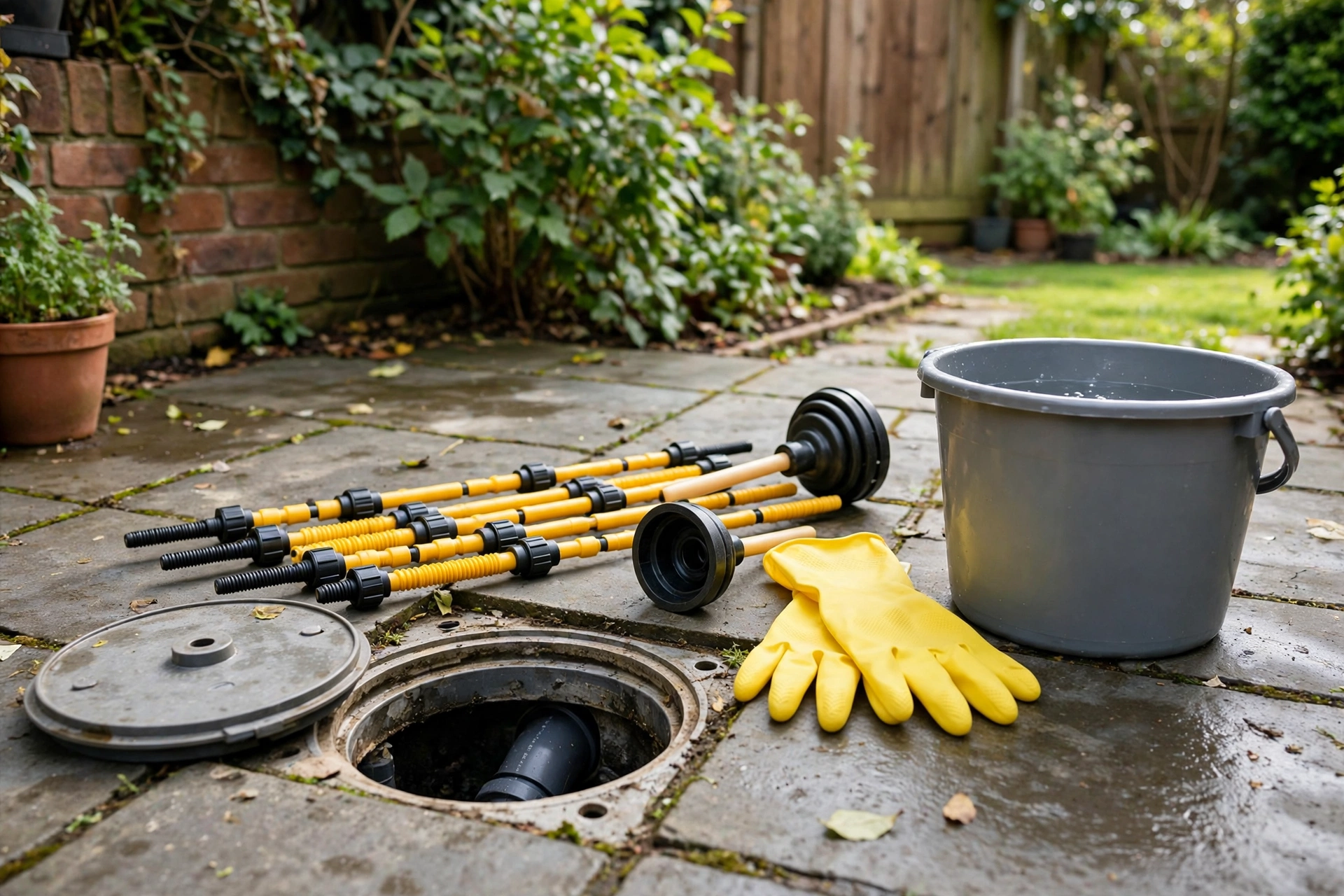
Drain rods are long, flexible sections that screw together to reach deep into a pipe. A single drain rod measures about a metre, and you add sections as the tool moves further along the pipe. Most sets come with two heads. A rubber plunger pushes the blockage along, and a corkscrew breaks it up or hooks it out. Flexible drain rods bend round corners, so they can follow the pipe without forcing it. Flexible sets suit pipes with bends, while stiffer sets suit straight runs. In short, the set gives you reach, force and control in one simple tool. Choose a set that locks together firmly, because loose joints cause most lost rods. Store the set clean and dry, because grit in the joints makes them hard to screw together next time.
How to Tell Where the Blockage Is
Blocked drains usually show one of two patterns, and the pattern tells you where to start. If one sink, shower or toilet drains slowly while the rest work fine, the blockage sits in that fitting. If several fixtures back up at once, the blockage sits further down. Gurgling from other plugholes points the same way. Also, lift the inspection chamber covers outside, starting with the one nearest the house. A full chamber means the blockage lies further down the pipe. An empty one means it lies further up. So work from the first clear chamber back towards the house, and you will rod in the right direction.
Safety First: Before You Start
Put on heavy rubber gloves and eye protection before you touch anything. Drain water carries bacteria, and splashes can reach your face fast. Never enter a manhole or inspection chamber. The space can hold dangerous gases, and UK law treats it as a confined space. Also, never mix chemical cleaners, because the mix can release toxic fumes. Finally, keep children and pets away from the work area until you finish and wash your hands well.
Drain Rods and the Other Tools You Need
Drain unblocking needs only a few tools, and most of them sit in a DIY shed already. You need a screw-together rod set with plunger and corkscrew heads. Add a cup plunger, a bucket, old towels and a garden hose. A toilet auger, also called a plumber’s snake, helps with deep toilet blockages. It suits narrow pipes and toilet bowls, where rods cannot go. For sinks and showers, keep a pair of pliers and a small brush handy for trap cleaning.
How to Use Drain Rods Step by Step
Start by screwing two or three sections together, with the plunger head fitted first. Feed the drain rods into the pipe in the direction of the blockage, which usually means away from the house. Add sections as the tool moves deeper, and keep turning the set clockwise as you push. Never turn it anticlockwise, because the joints can unscrew and leave a section stuck inside the pipe. Push and pull gently to work the blockage loose. Swap to the corkscrew head if the plunger will not shift it. You will often feel the blockage give way, and the water level will drop fast. Rodding a drain takes patience, so work slowly and let the tool do the work. Finally, flush the pipe with a hose or several buckets of water to clear the debris.
Rodding from the Clear Chamber
If the chamber nearest the house is full, find the first clear chamber further down the pipe. Rod back from the clear chamber towards the house, and cover the outlet so the debris cannot block the next stretch. This trick saves time, because you work on the shortest stretch of pipe.
Drain Rods for Outdoor Drains and Gullies
Outdoor drains block with leaves, silt and grease, and the gully grid often hides the worst of it. First, lift the grid and scoop out what you can reach with gloved hands. Then run a hose into the pipe to wash the loose silt away. If the water still stands, feed drain rods into the pipe from the nearest chamber. Turn clockwise all the way. A gully with a trap needs care: if it has no rodding eye, do not force the set through the bend. Instead, call a drainage engineer, because a cracked trap costs far more than a visit.
How to Unblock a Blocked Toilet
Unblocking toilet blockages takes patience, so work slowly and keep the floor dry. First, do not flush again: a second flush can flood the bathroom. Fit a flange plunger over the outlet, push down slowly, then pull up sharply. Repeat the motion for 15 to 20 seconds, and check whether the water drops. If plunging fails, pour in washing-up liquid and a bucket of hot tap water, then wait half an hour. Never pour in boiling water, because the heat can crack the porcelain. For a deep blockage, use a toilet auger. Never push drain rods into the bowl: the stiff sections can crack it or get stuck.
Toilet Not Flushing: Cistern and Flush Button Fixes
A toilet not flushing usually has a cistern fault, not a blocked pipe. First, lift the cistern lid and look inside. If the water level sits low, adjust the float arm so the cistern fills higher. If the flush feels weak, check the chain or cable that links the button to the valve. A loose link wastes the flush. A toilet that won’t flush at all may need a replacement toilet flush button. It fits in minutes with no tools. Finally, if the cistern fills but the bowl still will not flush, the fault may sit deeper, so call a plumber.
How to Unblock a Kitchen Sink
How to unblock a kitchen sink depends on where the blockage sits. First, try a cup plunger over the plughole, with enough water in the sink to cover the cup. Push down firmly, then pull up sharply, and repeat for 20 seconds. If the sink still drains slowly, unscrew the trap beneath it and empty the contents into a bucket. Grease and food build up there, so clean the trap well before you refit it. For a light blockage, pour in baking soda and vinegar, wait 15 minutes, then flush with hot tap water.
How to Unblock a Shower Drain
A blocked shower drain usually means hair in the trap, so start there. First, lift the drain cover and pull out the hair with gloved fingers or a small hook. Then run hot water to check the flow. How do you unblock a shower drain without tools? Pour in baking soda and vinegar, wait 15 minutes, then flush with hot tap water. If the water still stands, unscrew the trap and clean it out. A drain snake can reach deeper blockages, but take care not to scratch the tray.
Chemical Unblockers: What Works and What to Avoid
Chemical unblockers can clear light grease, but they rarely shift a solid blockage. An outdoor drain unblocker suits gullies and outside pipes, yet it will not beat a mass of wet wipes. Never mix two products, because the mix can release toxic fumes. Also, never pour chemicals into a toilet that already holds standing water, because the splash can burn skin. Always wear gloves and eye protection, and read the label first. In most cases, rods, a plunger or a snake clear the blockage faster and more safely than any bottle.
Who Is Responsible for the Drain?
In England and Wales, you own the drains inside your boundary that serve only your home. Your water company owns the pipes outside your boundary, the pipes you share with a neighbour, and the sewers. Roadside drains and gullies belong to the council, so report a blocked one to them. If you rent, tell your landlord first, because the repair may sit with them. Check your water bill or the water company website to confirm who owns which pipe.
When to Call a Professional
Call a drainage engineer if sewage smells rise from a drain, or if water backs up into the bath or shower. Also call one if several fixtures block at the same time, because the fault sits in the main drain. A collapsed drain, a cracked pipe or a blockage that returns every few weeks all need a camera survey. Finally, if the water company owns the pipe, call them first, because they may clear it free.
Mistakes to Avoid with Drain Rods
Turning the set anticlockwise tops the list of mistakes, because the joints can unscrew inside the pipe. Forcing the tool round a tight bend can crack a pipe, so feed it gently instead. Using the set in a toilet bowl can crack the porcelain, so use an auger there. Finally, pouring chemicals into a drain you just rodded can splash back, so wait and flush with water first.
Frequently Asked Questions
Can I use rods in a toilet?
No. Never use drain rods in a toilet bowl: the stiff sections can crack the porcelain or get stuck. Use a flange plunger or a toilet auger instead.
How do you unblock a shower drain without calling a plumber?
Start with the trap: lift the cover, pull out the hair, then flush with hot water. If that fails, try baking soda and vinegar, then a drain snake.
Why is my toilet not flushing properly?
Check the cistern first: a low water level, a loose chain or a worn valve all cause weak flushes. A toilet not flushing properly rarely means a blocked pipe.
Will rods go round bends?
Yes, if you feed them gently and keep turning clockwise. Flexible sets bend best, but never force the tool round a tight corner.
What should I never flush down a toilet?
Flush only waste and toilet paper. Wipes, sanitary products, cotton pads and kitchen roll do not break down, and they cause most toilet blockages.
Once the drains run clear, take a look round the rest of the house. A blocked drain often shows up in a home that needs a little care elsewhere. Our living room wallpaper guide shows how to freshen up the room where the family spends most of its time. With the drains clear and the rooms fresh, the whole house feels better.









Post Comment