Abdominal Crunch Equipment: Complete Guide to Machines
Many fitness enthusiasts spend years performing hundreds of floor crunches without noticing significant improvements in core definition or trunk strength. Standard floor work often causes lifters to pull violently on their necks, arch their lower backs, and recruit their hip flexors rather than their midsection. This common struggle explains why both commercial facilities and garage gyms invest heavily in dedicated abdominal crunch equipment.
True abdominal development requires mechanical isolation, controlled spinal flexion, and structured resistance. By understanding how to select, adjust, and train on dedicated core machines, you can remove unwanted strain from your spine and focus directly on deep muscle hypertrophy.
What is Abdominal Crunch Equipment and How Does It Work?
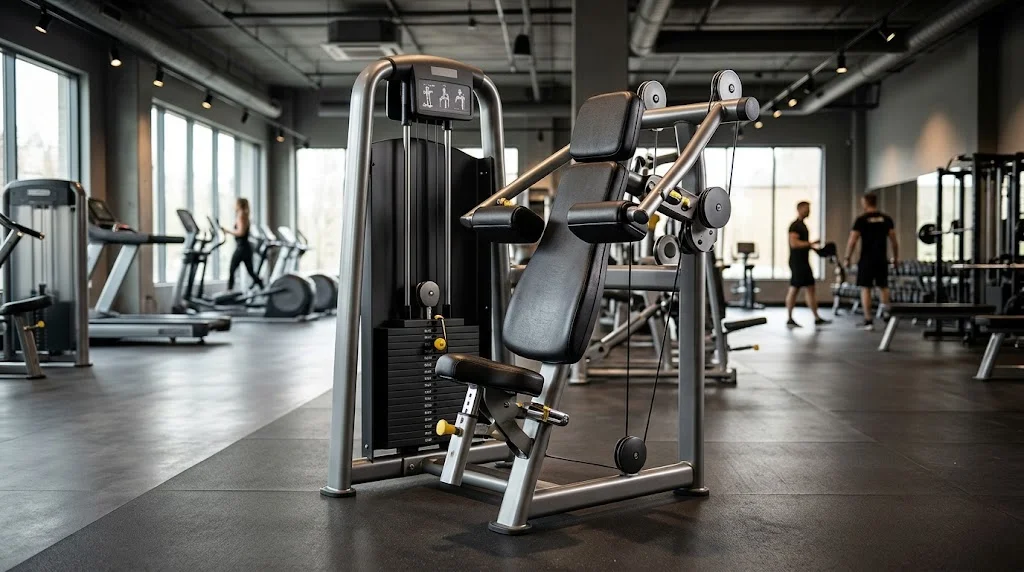
Abdominal crunch equipment refers to any specialized fitness device engineered to guide or load the body through targeted trunk flexion. Unlike sit-ups, which hinge primarily at the hips and overload the hip flexor complex, a proper crunch curls the ribcage directly toward the pelvis. High quality abdominal crunch equipment stabilizes your lower body, preventing secondary muscle groups from taking over the movement.
The primary muscle targeted during this curling motion is the rectus abdominis, commonly known as the six-pack muscle. Secondary stabilizers include the internal and external obliques, which compress the abdomen and rotate the torso, along with the deep transverse abdominis. When you sit in a dedicated seated ab machine, the fixed movement path forces your rectus abdominis to perform the mechanical work of pulling your sternum downward, providing clean isolation that is difficult to replicate on a gym mat.
The Main Types of Ab Crunch Equipment
The market for core training gear spans everything from multi-thousand-dollar commercial units to affordable living room accessories. Choosing the best fit depends entirely on your training goals, available floor footprint, and budget.
-
Commercial Selectorized Weight Stack Machines: Units like the Matrix G7 S51 single station abdominal crunch represent the gold standard in durability. These selectorized ab crunch stations use a pin-select weight stack, padded chest arms, and dual pivoting abdominal machine mechanics to provide smooth, continuous tension across the entire range of motion.
-
Plate-Loaded Core Stations: Found in serious strength facilities, these machines use standard Olympic weight plates loaded onto side pegs. They offer heavy resistance for advanced lifters seeking maximum core hypertrophy.
-
Floor Ab Rollers and Rockers: These curved tubular frames cradle the head and neck, allowing beginners to perform guided crunches on the floor without pulling on the cervical spine.
-
Adjustable Decline Ab Benches: These slant boards utilize gravity and bodyweight resistance. By adjusting the decline angle, you can perform steep incline crunches, reverse leg raises, and rotational twists.
-
Cable Crunch Stations and Attachments: Using a high pulley cable stack with a heavy-duty rope attachment allows you to perform kneeling cable crunches, keeping constant tension on the midsection through both the lifting and lowering phases.
Commercial Gym Machines vs Home Ab Crunch Equipment
When comparing high-end health club setups with residential fitness gear, the main differences lie in footprint dimensions, build materials, and resistance potential.
Commercial abdominal crunch machine designs feature heavy-gauge steel frames, reinforced pivot bearings, and integrated weight stacks that weigh several hundred pounds. They are designed to withstand constant daily use, but their large footprint makes them difficult to accommodate in small home gyms.
In contrast, residential abdominal crunch equipment prioritizes space saving engineering, foldable joints, and lightweight components. While home units may lack the high weight capacity of a commercial gym crunch station, they provide sufficient progressive tension for everyday fitness routines at a fraction of the financial investment.
Biomechanics: Aligning the Pivot Point Axis
The single biggest error people make on a seated crunch machine is ignoring the mechanical pivot point. Every commercial single station abdominal crunch features an axle or pivot axis, usually marked with a bright indicator knob or contrasting hardware.
For the machine to work as designed, your anatomical hinge point (your lower ribs and belly button area) must align horizontally with the machine’s mechanical axle. If your seat is adjusted too low, your spine cannot round naturally, forcing you to use your arms and shoulders to move the pads. If the seat is set too high, your lumbar spine extends excessively, shifting the entire workload onto your hip flexor group. Always adjust the seat height so the rotational axis matches your torso before selecting your working resistance.
Step-by-Step Guide: How to Use an Ab Crunch Machine with Perfect Form
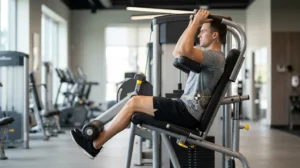
Executing clean repetitions on a seated ab crunch machine requires strict control, mindful breathing, and zero momentum.
-
Set Up the Machine: Adjust the seat so your navel aligns with the pivot axle. Place your feet securely behind the lower roller pads, and position your upper chest or shoulders firmly against the padded handles.
-
Establish the Starting Posture: Sit upright with your spine neutral. Grasp the handles lightly with your fingers, taking care not to pull forward with your arms or squeeze with your lats.
-
Initiate Spinal Flexion: Take a deep breath into your diaphragm, then exhale fully as you curl your ribs down toward your hips. Focus entirely on squeezing your abdominal wall rather than pushing with your legs.
-
Pause at Peak Contraction: Hold the fully crunched position for one full second. Squeeze your core hard to maximize motor unit recruitment.
-
Control the Eccentric Return: Inhale as you slowly reverse the movement over two to three seconds. Stop just before the weight stack touches down, maintaining active muscular tension throughout your entire set.
Common Mistakes That Cause Neck and Lower Back Pain
Using abdominal crunch equipment incorrectly can lead to joint irritation and poor results. Watch out for these standard technical flaws:
-
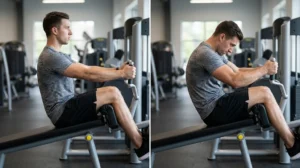
Pulling with the Arms: Treating the padded handles like a rowing machine removes tension from the core and strains the shoulders. Your arms should act merely as contact points, not the engine driving the pads.
-
Hyperextending on the Return: Allowing the resistance stack to yank your torso backward into excessive lumbar extension can pinch the lower vertebrae. Always stop the return when your spine reaches a neutral, upright alignment.
-
Psoas and Hip Flexor Takeover: If your thighs burn more than your abs, your seat position is incorrect, or you are pushing with your feet instead of rolling your pelvis. Relax your legs and focus on drawing your ribcage downward.
Core Hypertrophy: Programming Sets, Reps, and Progressive Overload
The rectus abdominis is a skeletal muscle like the biceps or quadriceps, meaning it responds best to progressive overload rather than endless sets of fifty unweighted repetitions. Utilizing dedicated abdominal crunch equipment enables you to gradually increase resistance over time, stimulating thicker muscle bellies that remain visible at moderate body fat levels.
For general abdominal strength and muscular density, perform 3 to 4 working sets of 10 to 15 controlled repetitions, training two to three times per week. Once you can complete 15 clean reps with a 1-second pause at the bottom, increase the resistance by the smallest available pin increment. You can also incorporate drop sets or slow 4-second eccentric negatives on a selectorized unit to challenge muscle endurance without overloading spinal joints.
Key Buying Considerations for Home Gym Setups
If you are shopping for reliable abdominal crunch equipment to add to your personal workout space, keep the following evaluation criteria in mind:
-
Frame Gauge and Stability: Look for solid steel construction with wide base stabilizers so the unit will not wobble during explosive contractions.
-
Adjustability Points: Ensure the machine offers multiple seat heights, chest pad depths, and leg roller positions to accommodate all family members or training partners.
-
Resistance Type: Decide between a smooth selectorized weight stack, a plate-loaded horn that accepts your existing iron plates, or simple bodyweight-assisted resistance levers.
-
Footprint and Portability: Measure your floor space carefully. If square footage is limited, look for compact core trainers or foldable slant benches that slide under a bed or tuck into a corner.
FAQs
Does abdominal crunch equipment help burn belly fat?
No machine can spot-reduce adipose tissue from your stomach. While abdominal crunch equipment strengthens and thickens the abdominal wall, revealing those muscles requires achieving a caloric deficit through balanced nutrition and regular physical activity to lower overall body fat percentage.
Is an ab crunch machine safe for individuals with lower back pain?
When properly adjusted, a seated machine can be safer than standard floor crunches because it controls your range of motion and prevents dangerous twisting. However, individuals with active lumbar disc herniations should consult a physical therapist before performing weighted spinal flexion exercises.
How often should I use abdominal crunch equipment each week?
Training your abdominal wall two to three non-consecutive days per week is ideal. Because the core recovers quickly from mechanical tension, brief sessions featuring three to four well-executed sets provide ample stimulus without overtraining.











Post Comment