High Blood Pressure: A UK Guide to Readings, Causes and Lowering It Naturally
High blood pressure is common in the UK, and many people have it without knowing. It rarely causes clear symptoms, so the only way to find it is to measure it. This guide explains what high blood pressure means, what causes it, and how to lower it. You will also learn what counts as a normal reading and how to check your own blood pressure at home.
What Is High Blood Pressure?
In fact, blood pressure is the force of blood on artery walls. A reading has two numbers. First, systolic pressure measures the force when your heart beats. Next, diastolic pressure measures the force when your heart rests between beats. Doctors write it as systolic over diastolic — for example, 120/80 mmHg.
It means the force stays too high over time. In a clinic, the NHS counts a reading of 140/90 mmHg or higher as high. At home, the line sits lower, at 135/85 mmHg or higher. The British Heart Foundation puts the healthy range at roughly 90/60 to 130/85 mmHg. One high reading settles nothing. As a result, your GP will want repeat readings first.
High Blood Pressure Symptoms — Or the Lack of Them
In fact, most people with it feel perfectly fine. The NHS says it usually causes no symptoms at all. That is why doctors sometimes call it a silent condition. The only way to know is to have your blood pressure measured. However, a few people notice headaches or nosebleeds, but these signs are not reliable. So never use symptoms alone to judge your blood pressure. Instead, get a regular check — it gives you a far better answer.
Can High Blood Pressure Make You Tired?
Can it make you tired? It rarely causes tiredness on its own. For example, tiredness often comes from poor sleep, stress, low iron or an underactive thyroid. However, if you feel tired all the time and your readings run high, see your GP. They can look for the real cause.
What Are the Reasons for High Blood Pressure?
Doctors often cannot point to one single cause. For most people, several small factors add up over time. First, age plays a part, because arteries stiffen as we get older. In addition, a family history raises the odds. For example, extra weight, too little activity, too much salt and regular alcohol all push readings up. Smoking narrows the arteries as well. Similarly, stress can lift readings for short spells, and poor sleep can do the same. A few people have a clear medical cause, such as a kidney problem. Whatever the cause, the same first steps help: move more and eat less salt.
Poor Sleep and Your Blood Pressure
Poor sleep can raise your readings, night after night. Broken sleep keeps stress hormones high. For example, if you snore loudly, gasp at night or wake up tired, common sleep problems may sit behind it. A steady sleep routine helps: fixed bed and wake times, a dark cool bedroom, and no screens late at night. If sleep problems last for weeks, raise them with your GP.
What Is Low Blood Pressure?
On the other hand, low blood pressure sits at the other end of the scale. The NHS counts a reading below 90/60 mmHg as low. Many people with low readings feel fine and need no treatment at all. However, others feel dizzy when they stand up, or faint on a hot day. So what is low blood pressure, and when does it matter? If it causes no trouble, doctors usually leave it alone. If you feel dizzy often, faint, or cannot concentrate, see your GP.
Blood Pressure by Age
Blood pressure tends to rise with age. In fact, arteries lose some of their stretch over the years, so the top number creeps up. That is why doctors check readings more often as people get older. Your GP will judge your numbers in context. For people over 80, the British Heart Foundation sets the clinic target a little higher, at below 150/90 mmHg. Overall, a pattern over days and weeks tells the real story.
Good BP for Men
For example, men often run slightly higher readings than women of the same age. A good bp for men in middle age usually sits in the healthy range, around 120/80 mmHg. In fact, your GP looks at the whole picture. Also, weight, activity, smoking and family history all shape the number.
Woman Normal Blood Pressure by Age
In contrast, women often have lower readings than men before the menopause. After the menopause, however, readings climb and often catch up with men’s. So a woman’s normal blood pressure by age is not one fixed number — it shifts across life. Pregnancy can raise blood pressure too, so follow your midwife’s advice.
What Is a Normal Heart Rate?
First, blood pressure and heart rate measure different things. Blood pressure tracks the force of blood on artery walls. Heart rate counts how many times your heart beats each minute. So what is a normal heart rate? For most adults at rest, it sits between 60 and 100 beats per minute. Athletes often rest below 60, and that is normal for them. For example, check your pulse at your wrist for 30 seconds and double the count. If your resting rate often sits above 100, or below 50 with dizziness, ask your GP about it.
How Can I Lower High Blood Pressure Naturally?
How can I lower my blood pressure? Start with the daily habits below. First, move more: brisk walking, cycling or swimming all help. Aim for activity that raises your heartbeat most days. Next, lose extra weight if you carry it, since even a small loss helps. Also, cut back on alcohol, and stop smoking if you smoke. Finally, find ways to ease stress, from a daily walk to a regular sleep routine. Talk to your GP first if you already have a health condition.
Low Sodium Diet and Daily Sodium Intake
In fact, salt is one of the biggest drivers of high readings. The NHS advises adults to eat no more than 6 grams of salt a day. That is about 2.4 grams of sodium. For example, most of us eat far more, mainly from processed foods. A low sodium diet starts with labels: check the salt per 100 grams and pick the lower option. In addition, cook with herbs and spices instead of salt. As a result, your daily sodium intake will fall fast once you cut processed foods.
How to Take Home Blood Pressure
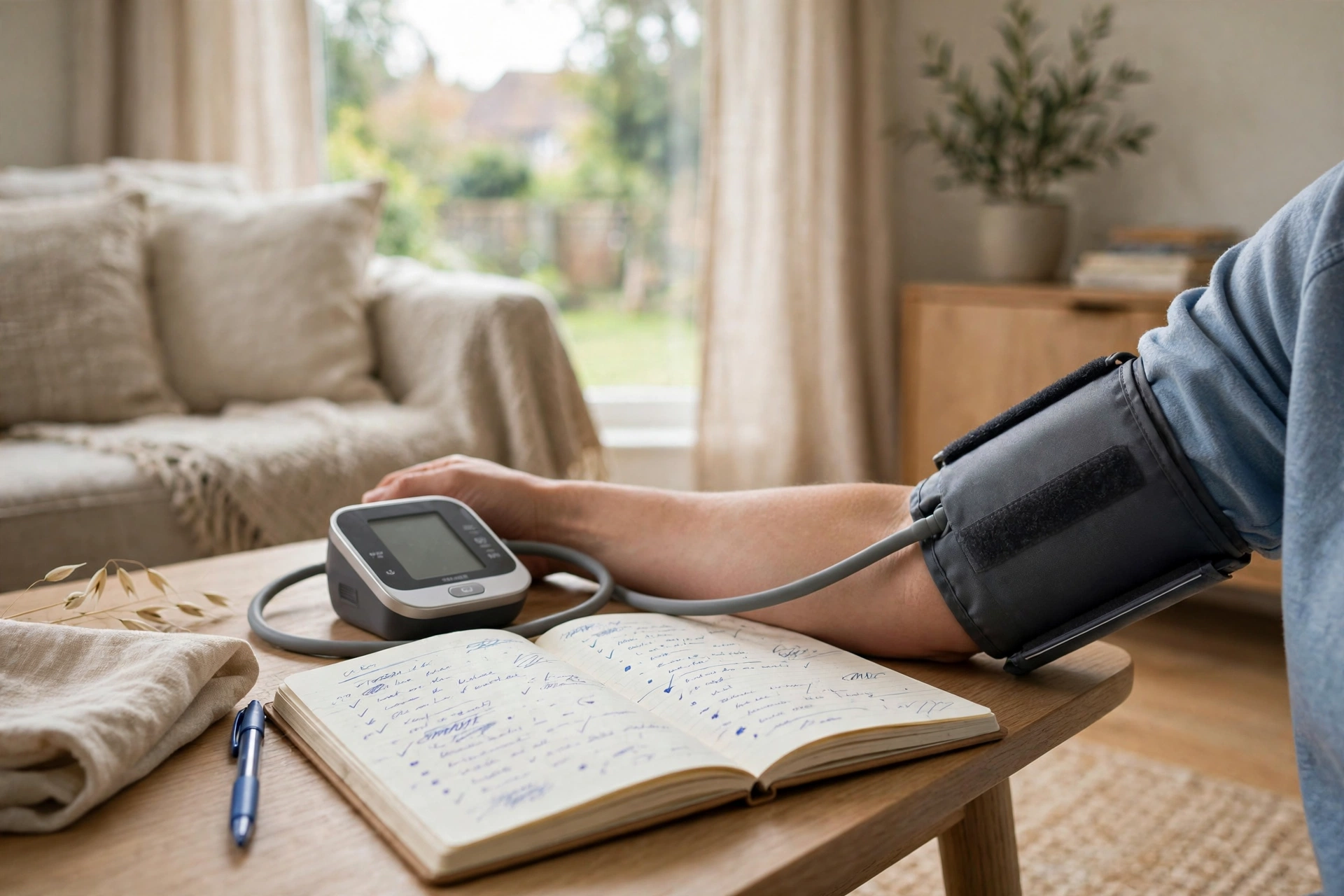
Home readings help your GP see the real pattern. First, pick a validated upper-arm monitor — your pharmacist can advise on one. Next, rest for five minutes, then sit with your back supported and feet flat on the floor. Keep your arm resting at heart level. Avoid caffeine, food and exercise for 30 minutes before you measure. Take two readings a minute apart and write down both. Measure at the same times each day for a week, then share the results with your GP. One high reading at home means little, but a run of high ones deserves a conversation.
How Do I Measure Blood Pressure Correctly?
How do I measure blood pressure correctly? First, use the right cuff size — a cuff that is too small reads high. Keep the cuff on bare skin, not over a sleeve. Sit still and stay quiet while it inflates. Do not talk, and do not cross your legs. Next, repeat the reading after a minute. Note the lower of the two if they differ. Finally, always use the same arm.
Keep a BP Blood Pressure Diary
A bp blood pressure diary turns scattered readings into a clear picture. Write down the date, the time, and both numbers for each reading. In addition, add a note if something was different, such as a salty meal. As a result, patterns jump out quickly when you look back over a week. Print a simple log sheet at home, or ask your GP or pharmacy for one. A printable nhs blood pressure recording chart gives you a ready-made table to fill in. A free blood pressure log sheet pdf works the same way. Bring the diary to your GP appointment — it helps them far more than a single reading.
High Blood Pressure Guidelines in the UK
The UK follows guidance from NICE, the National Institute for Health and Care Excellence. Its high bp guidelines set the clinic threshold at 140/90 mmHg and the home threshold at 135/85 mmHg. If a clinic reading runs high, your GP may offer 24-hour ambulatory monitoring to confirm the picture. For example, adults aged 40 to 74 in England can also get a free NHS Health Check every five years. Your GP will shape any plan around your readings and your overall health.
When to See Your GP
First, book a GP appointment if home readings stay high over a week, or if you feel unwell. Seek urgent help if you have chest pain, breathlessness, or trouble speaking. Call 111 or go to A&E. These signs need same-day attention, so do not wait. Also see your GP before big diet or exercise changes if you already have a health condition. The same applies if you take regular medicine or are pregnant. A short chat keeps your plan safe and personal.
FAQs
Can high blood pressure make you tired?
It rarely causes tiredness on its own. Tiredness has many causes, from poor sleep to other health problems. If you feel tired all the time, see your GP.
What is a normal blood pressure reading?
For most adults, a healthy reading sits roughly between 90/60 mmHg and 130/85 mmHg. In fact, around 120/80 mmHg counts as ideal. Ask your GP what target fits you.
How often should I check my blood pressure?
If your readings are healthy, a check every few years is enough. If they run high, your GP may ask you to check daily for a week, then less often.
Does salt really raise blood pressure?
Yes. Salt makes the body hold on to water, which raises the force on artery walls. As a result, cutting salt is one of the fastest changes you can make.
Can I lower my blood pressure without medicine?
Many people can, through activity, weight loss, less salt and alcohol, and stopping smoking. In addition, your GP can tell you whether lifestyle changes alone will do.
Finally, check your numbers, keep a simple diary, and talk to your GP about what they show. Overall, small steady steps protect your heart for years to come.









Post Comment